Pan's Labyrinth context
Context
(Spain 2006)
- Guillermo del Toro director
- Won three Academy awards: Cinematography, make up, Production design,
- Nominated for: Foreign language film, Original screenplay, Original score
. Nuevo Cine Mexicano (New wave Mexican cinema)
. Spanish Civil War
Initial ideas Mexico:
- A lot of corruption caused by drug cartels in the Government, Army, Police
- Wealth disparity - hugely divided country
- The PRI (institutional revolutionary Party) governed Mexico for over 70 years, from 1929 to 2001
- During this time, they were responsible for corruption, electoral fraud and authoritarianism (a way of governing that values order and control over personal freedom)
- They lost the election in 2001 ending their long reign
- New party (National Action Party) PAN, promised social change and to end corruption
- Against political unrest Nuevo Cine Mexicano was born
- Social inequality persists to this day in Mexico
- Mexico is 60% poor, only 10% are wealthy and 30% are middle class
- Mexico's cities are also very overpopulated
- During PRI's rule cinema was tightly controlled, restricting creativity and freedom of expression - this changed in 2001, allowing for the rise of Nuevo Cine Mexicano
- The three amigos, Inarritu, Cuaron and del Toro

Nuevo Cine Mexicano - Characteristics:
Influenced by French new-wave and Italian neo-realism:
- Use of actual locations rather than sets
- Documentary visual style
- Avoidance of neatly plotted storylines
- Use of conversational speech, not literary dialogue
- Avoidance of artifice in editing, camerawork, lighting
Nuevo Cine Mexicano - Key themes:
- Issues of gender and women's roles
- Rural vs urban Mexico
- Modernism, religion and economy
- Political issues (regional, national, international)
- Disintegration of society, values, morals etc.
- Sexual unfulfillment
- Sci-fi and new horror/ themes
Del Toro:
- Strong connection to fairy tales and horror, w/ an effort to infuse visual or poetic beauty
- He has a life long fascination with monsters, which he considers a symbol of great power
- Uses insectile and religious imagery
- Themes of catholicism
- Celebrating imperfection
- Underworld and clockwork motifs, practical special effects, dominant amber lighting, and his frequent collaborations with actors Ron Perlman and Doug Jones
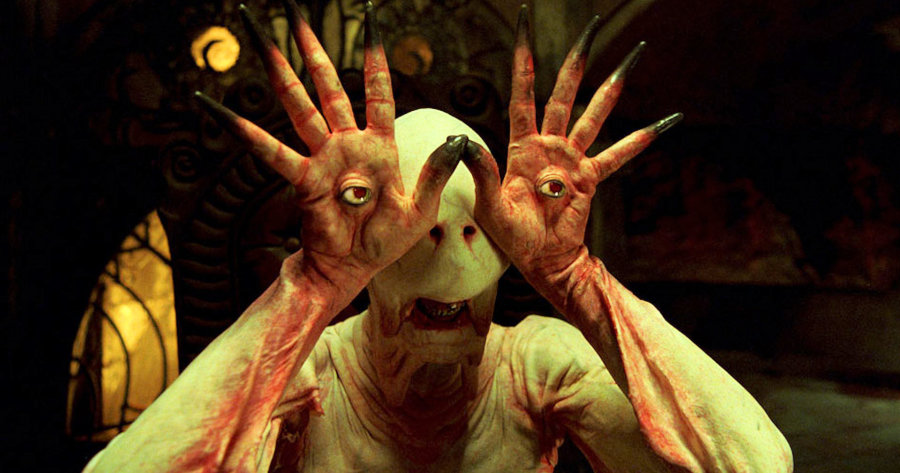
Spanish Civil War context:
- 1936 to 1939
- The Republicans (democratic, left leaning, urban secondary Spanish republic, w/ anarchists) fought against the Nationalist, Catholic, and largely aristocratic conservative group led by General Franciso Franco
- Democracy vs Fascism/ left vs right
- The Nationalists won and Franco continued to rule Spain for the next 36 years until his death in November 1975

(Spain 2006)
- Guillermo del Toro director
- Won three Academy awards: Cinematography, make up, Production design,
- Nominated for: Foreign language film, Original screenplay, Original score
. Nuevo Cine Mexicano (New wave Mexican cinema)
. Spanish Civil War
Initial ideas Mexico:
- A lot of corruption caused by drug cartels in the Government, Army, Police
- Wealth disparity - hugely divided country
- The PRI (institutional revolutionary Party) governed Mexico for over 70 years, from 1929 to 2001
- During this time, they were responsible for corruption, electoral fraud and authoritarianism (a way of governing that values order and control over personal freedom)
- They lost the election in 2001 ending their long reign
- New party (National Action Party) PAN, promised social change and to end corruption
- Against political unrest Nuevo Cine Mexicano was born
- Social inequality persists to this day in Mexico
- Mexico is 60% poor, only 10% are wealthy and 30% are middle class
- Mexico's cities are also very overpopulated
- During PRI's rule cinema was tightly controlled, restricting creativity and freedom of expression - this changed in 2001, allowing for the rise of Nuevo Cine Mexicano
- The three amigos, Inarritu, Cuaron and del Toro
Nuevo Cine Mexicano - Characteristics:
Influenced by French new-wave and Italian neo-realism:
- Use of actual locations rather than sets
- Documentary visual style
- Avoidance of neatly plotted storylines
- Use of conversational speech, not literary dialogue
- Avoidance of artifice in editing, camerawork, lighting
Nuevo Cine Mexicano - Key themes:
- Issues of gender and women's roles
- Rural vs urban Mexico
- Modernism, religion and economy
- Political issues (regional, national, international)
- Disintegration of society, values, morals etc.
- Sexual unfulfillment
- Sci-fi and new horror/ themes
Del Toro:
- Strong connection to fairy tales and horror, w/ an effort to infuse visual or poetic beauty
- He has a life long fascination with monsters, which he considers a symbol of great power
- Uses insectile and religious imagery
- Themes of catholicism
- Celebrating imperfection
- Underworld and clockwork motifs, practical special effects, dominant amber lighting, and his frequent collaborations with actors Ron Perlman and Doug Jones
Spanish Civil War context:
- 1936 to 1939
- The Republicans (democratic, left leaning, urban secondary Spanish republic, w/ anarchists) fought against the Nationalist, Catholic, and largely aristocratic conservative group led by General Franciso Franco
- Democracy vs Fascism/ left vs right
- The Nationalists won and Franco continued to rule Spain for the next 36 years until his death in November 1975
Good CW, Louie
ReplyDeleteNotes are of a high standard throughout this unit
Mr Boon